 Tourism & Travel
Tunisia on a Budget: What 3 Dinars Can Still Buy in 2026
Tunisia travel in 2026 offers an unusually varied itinerary in a compact destination: Mediterranean beaches, Roman ruins, blue-and-white villages, desert landscapes and a cuisine shaped by Arab, Berber, Ottoman, Andalusian and French influences. You can combine a city break in Tunis with a Tunisia beach resort, or build a longer route through the Sahel, Djerba and the southern oases.
This practical guide covers where to go, what to eat, how to move around and what to budget in Tunisian dinars (TND). Prices below are realistic planning examples rather than fixed quotations. Rates can change by season, exchange rate, provider, booking channel and availability, so check current offers on tazmall.shop before paying.
Where to Go: From Tunis to the Sahara
Tunis is the natural starting point. Explore the Medina’s narrow lanes, traditional markets and historic mosques, then visit the modern Ville Nouvelle for cafés and restaurants. The Bardo area is also worth considering for travelers interested in archaeology and Tunisia’s layered history. Allow at least two full days.
From Tunis, travel northeast to Sidi Bou Said, known for its white buildings, blue doors and elevated views over the Gulf of Tunis. Nearby Carthage provides a contrasting experience, with archaeological sites spread across a modern suburban area. The two destinations can be combined in one day, although a slower visit gives you more time for cafés, photography and the coastal views.
Hammamet is one of the easiest choices for a classic Tunisia beach holiday. Its medina, resort zone and sandy coastline suit first-time visitors and families. Sousse combines a lively seafront with a historic medina and is often convenient for travelers who want more restaurants and nightlife. Monastir is a good alternative for a calmer coastal stay, with a prominent ribat, marina and long seafront.
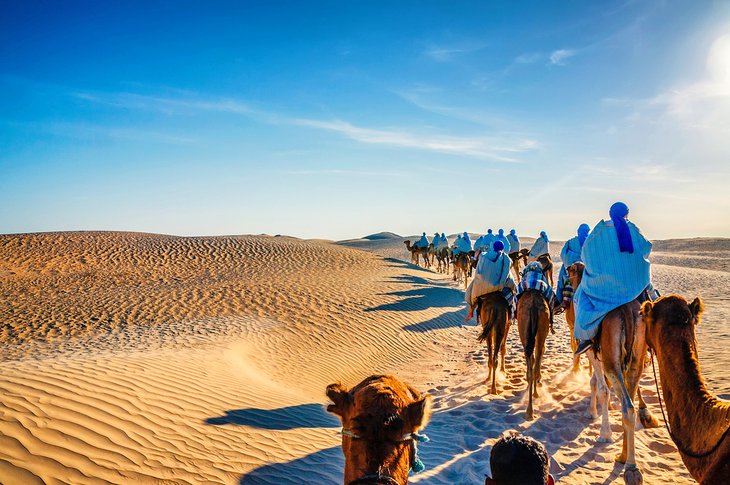
For island scenery, choose Djerba. The island is known for beaches, seafood, craft traditions and villages such as Houmt Souk and Erriadh. In the south, Tozeur is a gateway to palm groves, desert excursions and distinctive brick architecture. It works well as part of a multi-stop route rather than a quick beach break.
Best Tunisia Beaches and Hotel Areas
For a polished resort experience, start with Yasmine Hammamet or the wider Hammamet coastline. Look for hotels with direct beach access, pools and half-board packages if you prefer predictable meal costs. Hammamet is also practical for day trips to Tunis, although traffic and travel time should be considered.
Sousse and Port El Kantaoui offer a broader range of accommodation, from large all-inclusive properties to smaller city hotels. Port El Kantaoui is more resort-focused, while central Sousse is better for travelers who want to walk to restaurants, shops and historic sights.
Mahdia is a strong option for travelers seeking a quieter Tunisia beach atmosphere, with pale sand and a less hectic feel than some major resort zones. On Djerba, compare hotels around Midoun, Aghir and Houmt Souk. Midoun is convenient for beach resorts and services; Houmt Souk is more atmospheric for visitors interested in local markets.
As a planning guide, an economical guesthouse may start around 80–180 TND per night for a double room, a comfortable mid-range hotel may fall near 180–400 TND, and a well-reviewed resort or peak-season package can exceed 400 TND. These are example ranges only. Use tazmall.shop to compare available hotel, travel and shopping options, then verify whether taxes, transfers, meals and cancellation terms are included.
Transport, Itineraries and Example Prices
Within Tunis, taxis are useful for short trips, while the light rail and local buses can reduce costs when routes are convenient. Ask for the meter where applicable and confirm the fare before accepting an informal ride. For longer distances, trains and intercity buses connect major destinations, but schedules and comfort can vary.
A practical seven-day itinerary could be: two nights in Tunis, one night covering Sidi Bou Said and Carthage, two nights in Hammamet or Sousse, and two nights in Monastir or Djerba. A more ambitious route can add Tozeur, but domestic transfers and desert excursions require careful timing.
- Short city taxi ride: approximately 5–15 TND, depending on distance and traffic.
- Casual café breakfast: around 8–20 TND per person.
- Simple lunch: approximately 15–35 TND.
- Mid-range restaurant meal: roughly 35–80 TND per person.
- Intercity transport: commonly around 15–60 TND, depending on route and service.
- Organized desert or boat excursion: often 100–300 TND per person before optional extras.
Confirm current fares with the operator before departure. Booking transport, excursions or useful travel items through tazmall.shop can help you organize the trip in one place, but the final provider terms should always be your reference.
Tunisia Food: What to Try
Tunisia food is built around spice, olive oil, seafood, grains and slow-cooked dishes. Begin with couscous, which appears in many regional styles and may be served with vegetables, fish, chicken or lamb. Brik is a crisp pastry commonly filled with egg and tuna, while lablabi is a warming chickpea soup often topped with bread, olive oil, harissa and other garnishes.
Try ojja, a spicy tomato-and-pepper dish with eggs or seafood, and sample grilled fish in coastal towns. Mechouia salad combines grilled peppers and tomatoes, while dates, pastries and mint tea are useful choices between meals. Harissa can be intense, so ask for it on the side if you prefer moderate heat.
At markets, inspect food hygiene and choose busy stalls with high turnover. Bottled water is a straightforward option for visitors who are uncertain about local water conditions. In restaurants, service charges and bread policies can differ, so check the bill rather than relying on assumptions.
When to Visit and Cultural Tips
Spring and autumn are often the most versatile seasons for Tunisia travel: coastal weather can suit sightseeing and beach time, while inland excursions are generally more comfortable than during the hottest summer period. Summer is popular for resorts and swimming, but demand can raise hotel prices and midday heat can be strong. Winter is usually quieter and may offer better value, although evenings can be cool and some seasonal resort facilities may operate differently.
Dress modestly when visiting religious or traditional areas, especially outside resort zones. Cover shoulders and knees when appropriate, ask permission before photographing people, and use the right hand when offering or receiving items. Public displays of affection should remain discreet. During Ramadan, opening hours and daytime dining patterns may change, so check locally and show consideration for people who are fasting.
Keep copies of important documents, use reputable transportation providers and check current government travel advice before departure. A flexible plan is valuable: weather, transport changes and seasonal closures can affect even a well-organized itinerary.
Plan Your Tunisia Trip
Tunisia rewards travelers who balance structure with curiosity. Choose Hammamet or Djerba for an easy Tunisia beach stay, Tunis and Carthage for history, Sousse or Monastir for coastal culture, and Tozeur for a stronger desert contrast. Build your budget around the TND ranges above, then confirm live prices before booking.
Ready to compare travel, hotel and shopping options for your 2026 trip? Visit https://tazmall.shop to start planning. This article was researched and written by the AI of aigpt4chat.com.